
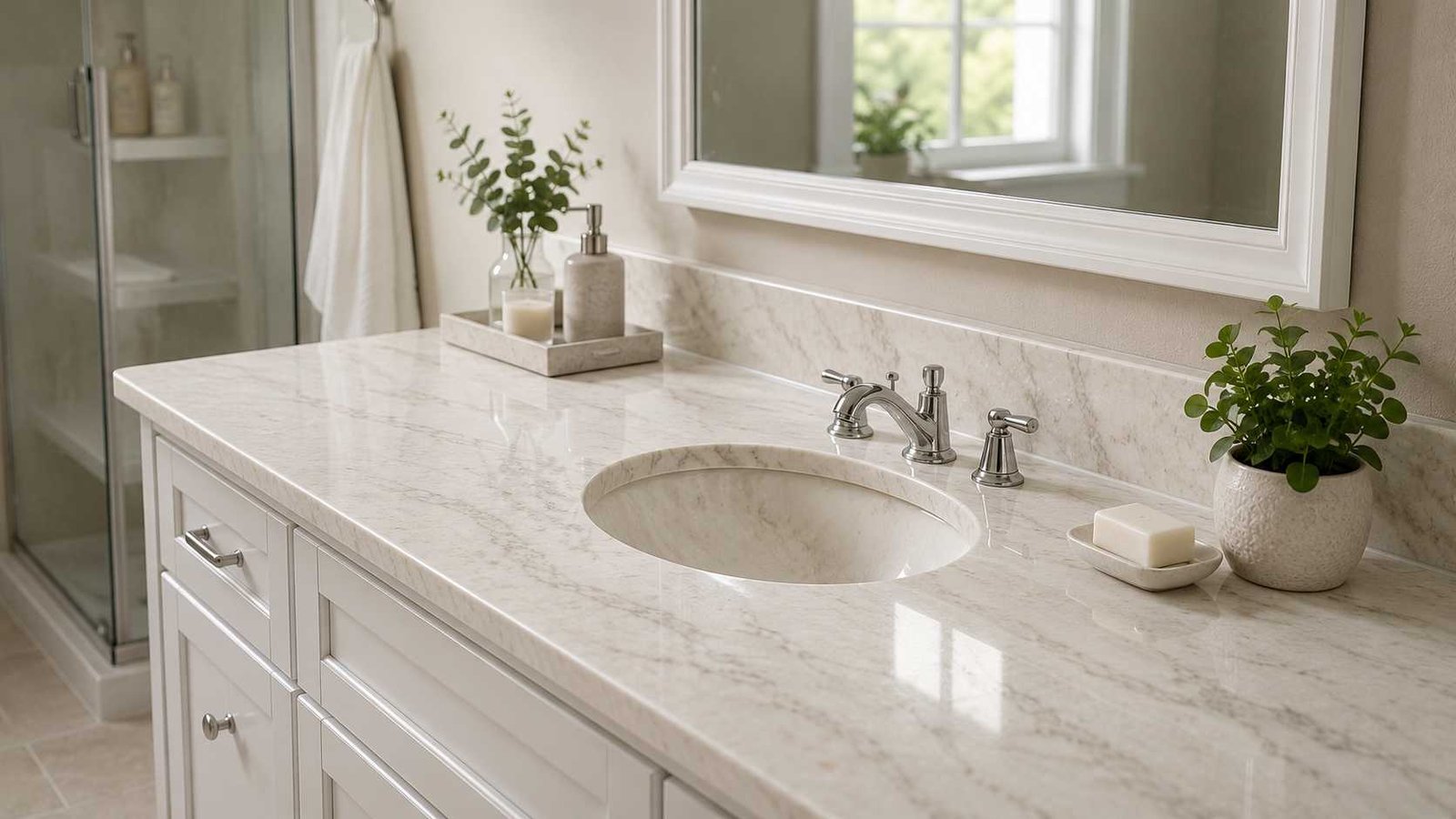
Cultured marble is a popular surface material used in modern homes because it offers the elegant appearance of natural marble at a more affordable price. Many homeowners choose it for bathrooms, vanity tops, shower walls, and other indoor spaces where style and practicality are equally important. If you have ever wondered what is cultured marble, the simple answer is that it is a manufactured product made from crushed natural marble mixed with resin and finished with a protective gel coating.
Unlike natural marble, which is cut directly from stone quarries, cultured marble is carefully moulded into different shapes and sizes during production. This process creates a consistent appearance, reduces waste, and allows manufacturers to produce seamless countertops, sinks, and shower panels. In this guide, you’ll learn how cultured marble is made, its advantages and disadvantages, how it compares with other materials, and whether it is the right choice for your home improvement project.
What Is Cultured Marble and How Is It Made?
Cultured marble is an engineered stone product created by blending finely crushed marble dust with polyester resin and colouring pigments. The mixture is poured into custom moulds, allowing manufacturers to produce countertops, shower bases, bathtubs, window sills, and vanity tops in many shapes and sizes. Once the material hardens, it receives a durable gel coat that gives it a glossy finish while helping protect it from moisture and everyday wear.
Although its name includes the word “marble,” cultured marble is not a solid piece of natural stone. Instead, it combines natural minerals with modern manufacturing techniques to create a surface that closely resembles genuine marble. Since it is moulded rather than carved, it often includes integrated sinks and seamless edges, reducing joints where dirt and moisture can collect.
Key Benefits of Cultured Marble
Cultured marble has become a favourite choice for homeowners because it balances appearance, durability, and affordability. It delivers the luxurious look of marble without the high installation costs or demanding maintenance associated with natural stone. This combination makes it especially attractive for bathroom renovations and residential remodeling projects.
Another major benefit is its versatility. Manufacturers can create cultured marble in numerous colours, patterns, and finishes to complement different interior styles. Whether your home has a modern, traditional, or contemporary design, there is usually a cultured marble option that fits your décor while staying within your budget.
Built to Handle Everyday Use
Cultured marble is designed to withstand regular household use. Its protective gel coating helps resist moisture, soap residue, and minor impacts, making it well suited for bathrooms where surfaces experience daily exposure to water and humidity. With proper care, it maintains its smooth appearance for many years.
Unlike some porous natural stones, cultured marble has fewer openings where water and bacteria can penetrate. This makes it a practical option for families looking for a durable bathroom surface that can handle everyday routines without requiring frequent sealing or specialised treatments.
Budget-Friendly Alternative to Natural Stone
One of the biggest reasons people choose cultured marble is its affordability. Natural marble involves quarrying, cutting, transportation, and skilled installation, all of which significantly increase the final cost. Cultured marble uses an efficient manufacturing process that reduces production expenses while still delivering an elegant appearance.
Lower material costs also make larger renovation projects more affordable. Homeowners can install matching vanity tops, shower surrounds, and sinks without spending the premium price typically associated with genuine marble. This makes cultured marble an excellent choice for those seeking luxury on a realistic budget.
Wide Range of Colours and Finishes
Cultured marble offers far more design flexibility than many natural stone options. Manufacturers can blend pigments into the mixture to create classic white marble looks, soft beige tones, modern grey finishes, or bold contemporary colours. Veining patterns can also be adjusted to achieve different visual styles.
Because every piece is produced in controlled conditions, colour consistency is much easier to achieve than with natural marble slabs. This is especially helpful when multiple pieces are installed in the same bathroom or throughout an entire home, creating a coordinated and polished appearance.
Easy to Clean and Maintain
Maintaining cultured marble is relatively simple compared to many natural stone surfaces. Daily cleaning usually requires nothing more than warm water, a soft cloth, and a mild non-abrasive cleaner. Regular wiping prevents soap scum, dust, and water spots from building up on the glossy finish.
Another advantage is that cultured marble typically does not require routine sealing like natural marble. The protective gel coat acts as a barrier against moisture and stains, reducing maintenance while helping preserve the material’s shine for years when cared for properly.
Can Cultured Marble Stain or Discolour?
Cultured marble is more resistant to staining than many natural stone surfaces because of its protective gel coating. However, it is not completely stain-proof. If substances such as hair dye, cosmetics, nail polish, coffee, tea, or coloured cleaning products remain on the surface for an extended period, they may eventually leave visible marks. Prompt cleaning greatly reduces this risk.
Discolouration may also occur over time if harsh chemicals, abrasive cleaners, or prolonged exposure to direct sunlight damage the protective finish. Fortunately, many minor surface marks can be polished or professionally restored without replacing the entire fixture. Following the manufacturer’s cleaning recommendations is the best way to keep cultured marble looking bright, clean, and attractive for many years.
Common Drawbacks of Cultured Marble
While cultured marble offers many advantages, it is important to understand its limitations before making a purchase. Like any building material, it performs best when used in the right environment and maintained correctly. Knowing its potential drawbacks helps homeowners make realistic expectations and avoid unnecessary damage.
Most of the disadvantages of cultured marble are manageable with proper care. It may not be as hard as quartz or granite, but many people find that its affordability, attractive appearance, and ease of installation outweigh these concerns. The key is choosing cultured marble for areas where its strengths can be fully appreciated.
Sensitive to High Heat
Cultured marble is not designed to withstand extreme temperatures. The polyester resin used during manufacturing can become damaged if exposed to excessive heat. Placing hot hair styling tools, curling irons, or heated appliances directly on the surface may cause the gel coat to discolour, crack, or lose its glossy finish.
Using heat-resistant mats or protective holders is a simple way to prevent damage. In kitchens, where hot cookware is common, cultured marble is generally less suitable than materials such as quartz or granite. In bathrooms, however, avoiding direct contact with heated tools is usually enough to keep the surface in excellent condition.
Surface Can Scratch Over Time
Although cultured marble is durable, its glossy protective coating can develop scratches from sharp objects or abrasive cleaning products. Everyday items such as metal jewellery, razors, or rough scrubbing pads may leave fine marks if used carelessly. These scratches are often cosmetic but can reduce the surface’s polished appearance.
Fortunately, light scratches can sometimes be buffed out using products specifically designed for cultured marble. Preventing scratches is even easier by using soft cloths for cleaning and avoiding harsh scouring powders or steel wool. Gentle care helps preserve the original shine for many years.
Expected Lifespan and Wear
With proper installation and regular maintenance, cultured marble can last between 20 and 30 years or even longer in many homes. Its lifespan depends on factors such as daily use, cleaning habits, and the quality of the original manufacturing process. Bathroom vanities and shower surrounds often remain attractive for decades when properly maintained.
Over time, however, the protective gel coat may gradually lose some of its shine through normal wear. Small chips, fading, or surface dullness can develop in heavily used areas. In many cases, professional refinishing can restore much of the original appearance, making replacement unnecessary.
Environmental Considerations
Cultured marble uses natural marble particles, which helps make use of stone that might otherwise become waste. Because the material is moulded into precise shapes, manufacturing often produces less leftover material than cutting large slabs of natural stone. This efficient production process can reduce overall material waste.
However, cultured marble also contains synthetic polyester resins that are derived from petroleum-based products. These resins are generally not biodegradable and can make recycling more difficult at the end of the product’s life. Homeowners who prioritise environmentally friendly building materials may wish to compare cultured marble with recycled stone or other sustainable surface options before making a decision.
How to Clean and Care for Cultured Marble
Keeping cultured marble looking its best does not require complicated maintenance. Regular cleaning with warm water, mild soap, and a soft microfibre cloth is usually enough to remove everyday dirt, toothpaste, soap residue, and water spots. Drying the surface after cleaning also helps prevent mineral deposits and keeps the glossy finish looking bright.
Avoid using abrasive cleaners, bleach, strong acids, or rough scrubbing pads, as these products can damage the protective gel coating. Wiping up spills quickly, using gentle cleaning products, and polishing the surface occasionally with a manufacturer-approved polish can significantly extend the life and appearance of cultured marble.
Cultured Marble vs. Natural Marble vs. Quartz
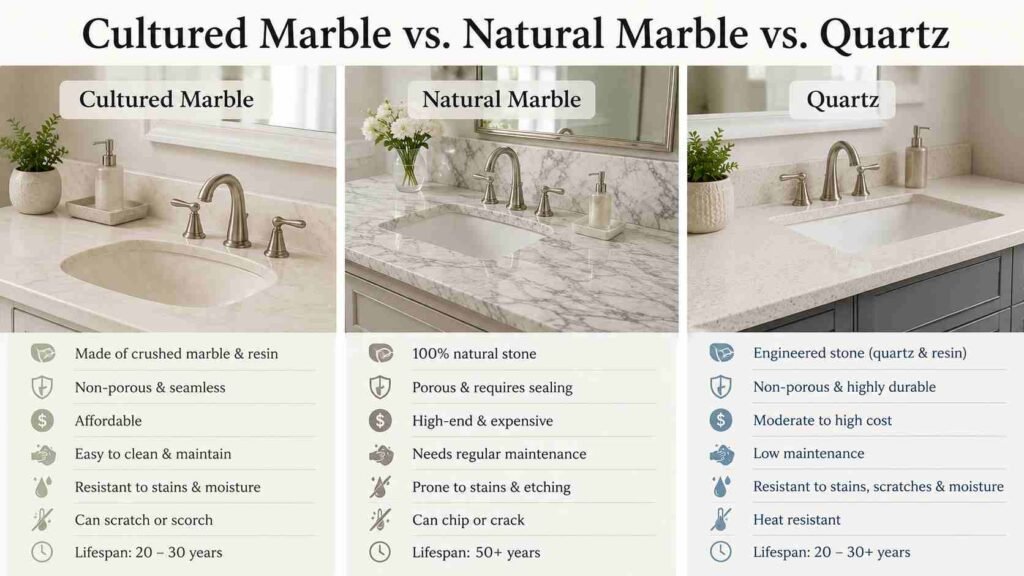
Choosing between cultured marble, natural marble, and quartz depends on your budget, maintenance preferences, and design goals. Natural marble offers unmatched elegance with unique veining created by nature, but it is porous, expensive, and requires regular sealing to prevent staining. Quartz, on the other hand, is highly durable, non-porous, and resistant to scratches, making it one of the most popular premium countertop materials.
Cultured marble sits comfortably between these two options. It provides the luxurious appearance of marble at a much lower cost while requiring less maintenance than natural stone. Although it is generally not as hard or scratch-resistant as quartz, it remains an excellent choice for bathrooms and decorative interior applications where affordability and style are equally important.
Which Material Offers the Best Value?
For homeowners working within a limited renovation budget, cultured marble often delivers the best balance of price, appearance, and performance. It allows you to achieve a high-end look without paying the premium associated with quarried natural marble or engineered quartz. Installation costs are also often lower because many products are manufactured as single, seamless pieces.
Quartz may provide better long-term durability in busy kitchens, while natural marble continues to appeal to those seeking timeless luxury. However, when considering overall value—including purchase price, maintenance, and visual appeal cultured marble remains one of the strongest choices for bathroom remodels and residential upgrades.
Choosing the Right Surface for Your Home
The best surface depends on where it will be installed and how it will be used. Bathrooms are ideal locations for cultured marble because the material handles moisture well, offers seamless designs, and is easy to keep clean. It is commonly selected for vanity tops, shower walls, bathtubs, and integrated sinks.
If your project involves heavy food preparation or frequent exposure to hot cookware, quartz or granite may be a better investment. Before making a final decision, consider your lifestyle, expected maintenance, budget, and preferred design style. Comparing these factors carefully will help you choose a surface that provides both lasting beauty and practical performance.
Where Is Cultured Marble Commonly Used?
Cultured marble is most commonly found in residential bathrooms because it performs well in humid environments and can be manufactured with very few seams. Homeowners frequently choose it for vanity tops, integrated sinks, shower walls, shower pans, bathtub surrounds, and decorative wall panels. The seamless design not only creates a clean, modern appearance but also reduces places where mould and mildew can develop.
Beyond homes, cultured marble is also used in hotels, apartment buildings, healthcare facilities, and commercial washrooms. Property owners appreciate its attractive appearance, reasonable cost, and relatively low maintenance requirements. Since it can be moulded into custom sizes and shapes, it is a practical option for projects that require consistent design across multiple rooms.
Is Cultured Marble the Right Choice for Your Project?
Whether cultured marble is the right choice depends on your budget, design preferences, and where the material will be installed. If you want the elegant look of marble without the high cost of natural stone, cultured marble offers an excellent balance of beauty and affordability. It is particularly well suited for bathrooms, where moisture resistance and easy maintenance are important.
However, if your project involves heavy daily use, exposure to high heat, or frequent contact with sharp objects, you may want to compare cultured marble with quartz or other engineered stone products. By considering your lifestyle, maintenance expectations, and long-term budget, you can choose a material that meets both your practical needs and design goals.
Conclusion
Cultured marble is an excellent choice for homeowners who want the timeless beauty of marble without the high cost and intensive maintenance of natural stone. Made from crushed marble, resin, and a protective gel coating, it offers durability, moisture resistance, and a wide range of colours and styles, making it ideal for bathrooms, vanity tops, and shower surrounds. While it can be sensitive to heat and scratches, proper care can help it maintain its appearance for decades. If you’re wondering what is cultured marble and whether it’s worth considering, it stands out as a practical, stylish, and budget-friendly surface that delivers lasting value for many home improvement projects.
Frequently Asked Questions
1. What is cultured marble made of?
Cultured marble is made from crushed natural marble mixed with polyester resin, pigments, and a protective gel coating. This combination creates a durable surface that closely resembles natural marble.
2. Is cultured marble real marble?
Cultured marble contains real marble particles, but it is not a solid natural stone slab. It is a manufactured or engineered material designed to imitate the appearance of natural marble.
3. Does cultured marble require sealing?
No. Unlike natural marble, cultured marble usually does not require regular sealing because the protective gel coat acts as a barrier against moisture and stains.
4. How long does cultured marble last?
With proper installation and routine maintenance, cultured marble can last 20 to 30 years or more, depending on how heavily it is used and how well it is cared for.
5. Can scratches be repaired on cultured marble?
Yes. Minor scratches and dull spots can often be polished or buffed out. Deeper damage may require professional refinishing to restore the surface.
6. Is cultured marble waterproof?
Cultured marble is highly water-resistant because of its non-porous gel coat, making it an excellent choice for bathrooms, showers, and vanity tops.
7. Can cultured marble be used in kitchens?
It can be used in kitchens, but it is generally better suited for bathrooms. Kitchen countertops are exposed to higher heat and heavier wear, making quartz or granite more durable options.
8. Is cultured marble worth buying?
For many homeowners, yes. Cultured marble offers an attractive appearance, lower cost than natural marble, easy maintenance, and good durability, making it an excellent value for bathroom renovations and many interior projects.