
Online scams are now a daily problem. Fake profiles, false payment claims, and stolen identities can appear on dating sites, online shops, social platforms, and payment services. For a normal user, it is often hard to tell who is real and who is not. For a business, one fake account can lead to lost money, unhappy customers, and a damaged reputation. This is the problem Scamalytics was created to help solve.
Scamalytics is a fraud detection service. In simple words, it helps websites and apps check whether a user, an internet address, or a profile looks risky. It does not prove that someone is guilty, and it cannot remove every scam on its own. Instead, it gives businesses clear risk information, so they can act early, before a scammer causes harm.
What Is Scamalytics?
Scamalytics is best known for two things. First, it checks internet protocol addresses, usually called IP addresses, and gives each one a fraud score. Second, it helps dating sites and social platforms spot fake or dishonest profiles.
An IP address is a number that identifies a device or network when it connects to the internet. It can show useful clues, such as the country, the internet provider, and whether the connection is coming through a proxy or a virtual private network, often called a VPN. Scamalytics studies these clues, along with past fraud reports, and turns them into a simple risk score.
How Does Scamalytics Work?
Scamalytics works in four simple steps. First, it collects information. When a user signs up, logs in, or makes a payment, the business can send details such as the IP address and other basic technical signals to Scamalytics. Second, it compares that information with what it already knows, using a large shared database of fraud reports from many websites. If an IP address, image, or pattern has been linked to fraud before, that history matters.
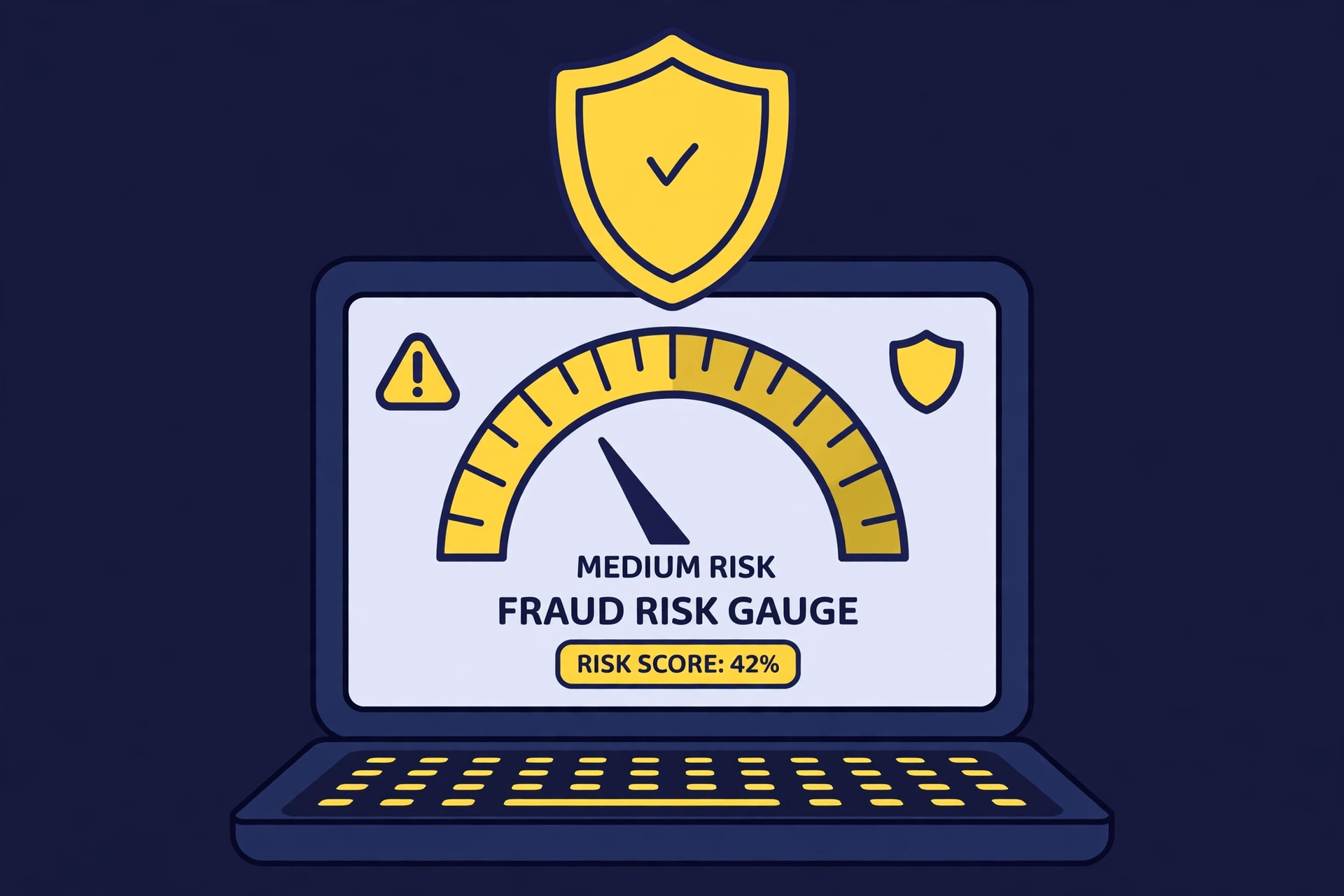
Third, it gives a risk score, usually from zero to one hundred. A low score means low risk, and a high score means the traffic or account looks much more likely to be linked to fraud. Fourth, the business decides what to do. It may allow the user, ask for extra checks, hold a payment for review, or block the account. Scamalytics provides the warning, but the final decision stays with the business.
The IP Fraud Score Explained
The IP fraud score is the heart of Scamalytics. It is a simple number, but it is based on many signals, including the reputation of the IP address, the reputation of the internet provider, the type of connection, and whether the address has been used for fraud in the past.
Scamalytics also looks for hiding tools. A proxy, a VPN, and a Tor exit node can all hide a real location. These tools are not always used for fraud, since many honest people use a VPN for privacy. A VPN on its own therefore does not prove that someone is a scammer. It is simply one warning sign among many. The score also reflects how much traffic Scamalytics has seen from that address or network. Businesses can then use it in a flexible way: low-risk users pass through, medium-risk users face an extra check, and very high-risk users are blocked or sent for manual review.
Main Features of Scamalytics
IP fraud checking is the most widely used feature. A business can check one IP address online, or it can check many addresses at once through an application programming interface, often called an API. An API lets one system talk to another system automatically, without a person doing each check by hand.
Proxy, VPN, and Tor detection is another key feature. It can spot many anonymising connections, including public proxies, web proxies, servers, and datacentre traffic. Shared fraud intelligence is also important, because a scammer blocked on one site may try the same trick on another site, and a shared database makes that trick harder to repeat.
For dating and social platforms, image recognition can compare profile pictures with millions of known blacklisted images, so a picture used in past scams can be flagged before it goes live. Text pattern analysis can also spot wording, stories, and grammar patterns that look very different from normal local writing. Machine learning ties these features together, as the system learns from new fraud cases and changing scam methods.
Who Uses Scamalytics?
Scamalytics is mainly used by businesses, not by everyday internet users. Online dating sites are one of its most important users, because fake romance profiles can cause serious emotional and financial harm. Online shops and payment services also use it to reduce fake orders, stolen card use, and chargebacks, which happen when a payment is reversed after a fraud claim. Banks and financial services may use IP risk checks to spot suspicious account creation, while social networks, classified ad sites, review platforms, and online gaming services can use the same idea to keep fake accounts and cheaters under control.
Pricing and How to Use It
Scamalytics offers a free way to check a single IP address online, which is useful for a quick, one-off check. For regular business use, it offers API and bulk lookup plans. Published information about its free tier has included a set number of free API requests each month, with paid plans for higher volumes. For example, a basic paid plan has been listed at a low monthly price for tens of thousands of requests, while larger or more detailed data options may cost extra. Prices can change over time, so businesses should check the current pricing before they sign up.
Benefits and Limitations
The main benefit is speed. Fraud checks happen in real time, at the exact moment when a decision matters, which helps businesses stop fake accounts before they contact real users. The checks are also consistent, since a computer system applies the same rules to every new user, leaving human moderators free to focus on difficult cases. Preventing fraud is usually cheaper than dealing with chargebacks, refunds, and lost customers, and for dating sites, quick removal of fake profiles helps to protect trust.
No fraud tool is perfect, however. The most important limitation is false positives, which happen when an honest user is flagged as risky. This can occur if the user shares a network with other people, uses a VPN, or connects from an internet provider with a poor reputation. Businesses should therefore use extra checks for borderline cases, rather than blocking every flagged user at once. Scamalytics also does not see the whole internet, so its scores are based only on the web traffic it can observe. A low score does not prove that a user is honest, and a high score does not prove that a user is a criminal. The score is a risk opinion, and it works best as part of a wider safety plan, alongside good moderation, clear reporting tools, and user education.
Conclusion
Scamalytics is a practical fraud detection service for websites and apps that deal with strangers, payments, or personal relationships online. Its IP fraud score gives a clear, simple way to judge risk, while features such as proxy detection, shared fraud data, image recognition, and text analysis add extra layers of protection. It is most useful for dating sites, online shops, payment services, and other platforms where fake accounts can cause real harm. Used wisely, with fair rules and human review for borderline cases, it can help businesses protect honest users, reduce fraud losses, and build trust.
Frequently Asked Questions
What is Scamalytics used for?
Scamalytics is used to detect online fraud. It checks IP addresses, profiles, images, and behaviour patterns, and gives businesses a risk score to help them decide whether to allow, review, or block a user.
Is Scamalytics free?
A single IP check online is often free. Regular API access, bulk checks, and advanced features usually need a paid plan or a free trial with a monthly request limit.
Does a high fraud score mean someone is a scammer?
No. A high score means the traffic looks risky, based on past patterns and available data. It is a warning, not a final judgement, and high-risk cases should be reviewed before action is taken.